
Chunking and Piano
How chunking save me time on learning piano 🎹

In design, "chunking" is a key concept involving grouping similar elements together. This approach, backed by psychology research, aims to enhance human memory. However, I want to take it further than just grouping similar components on the application interfaces and graphic posters.
Let’s start
When learning an instrument, except that you are practicing sight-reading, it's best not to play a piece straight through. Most music styles follow a certain structure, but understanding it can be tricky without some music theory knowledge.
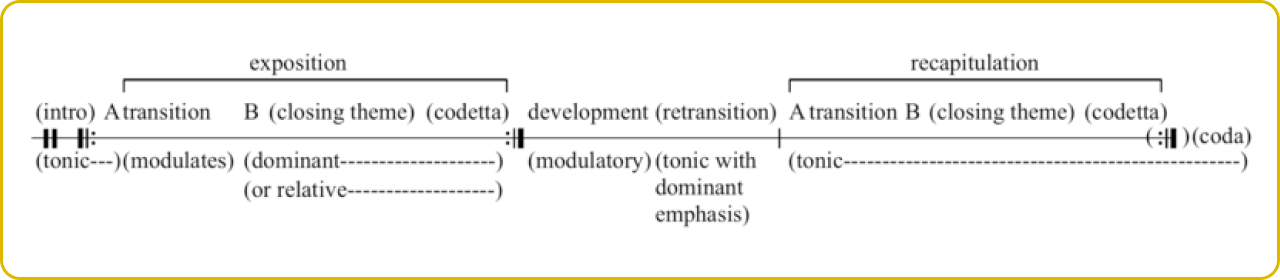
Even at a basic level, it's helpful to break a piece into smaller parts for easier learning. When teaching kids, I usually split the music by looking for whole notes, half notes, or the rest keys in every line or two. It's a simple and popular way to break down a piece because it’s quite short.
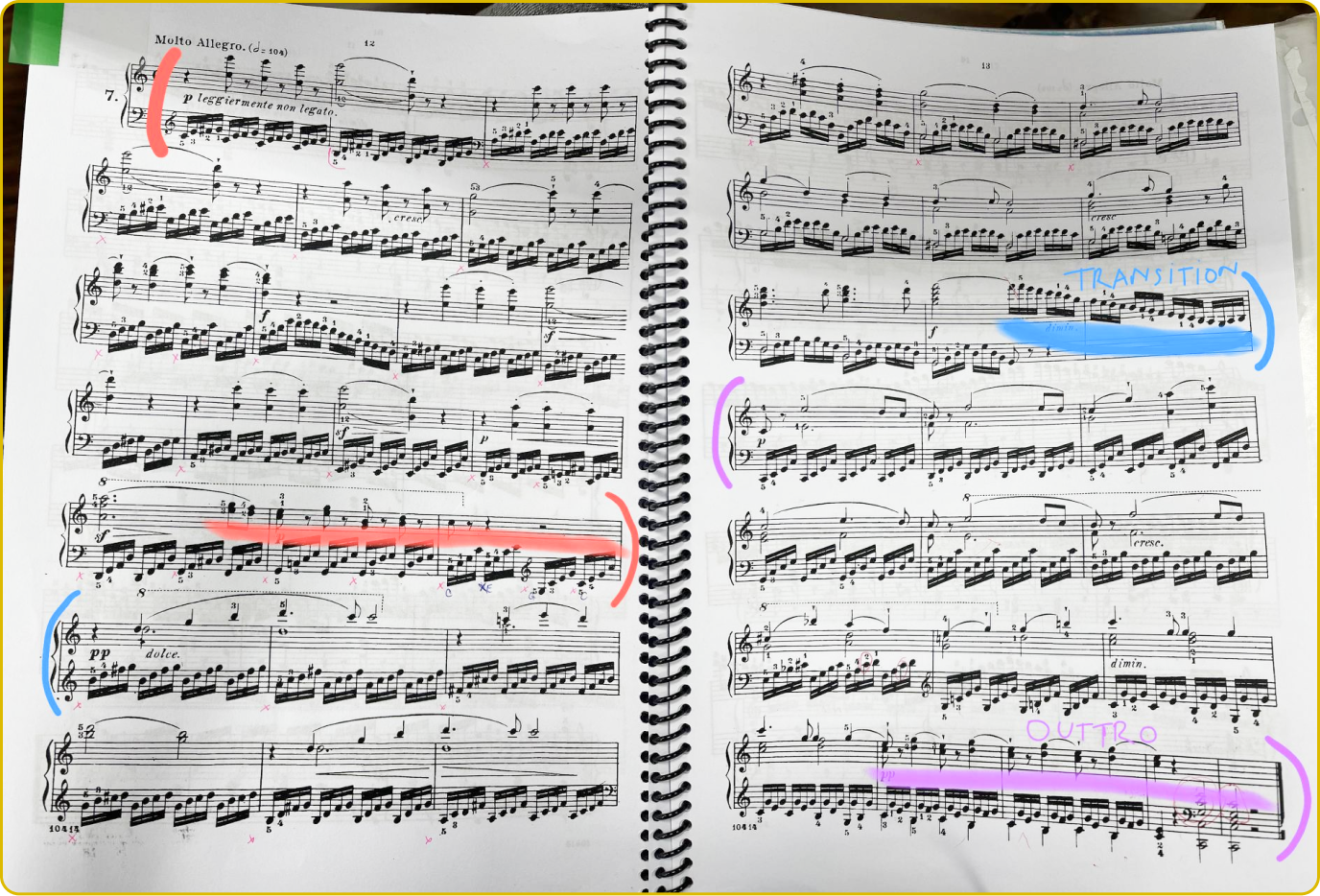
When reaching the intermediate level, I start to group the bars with the same pattern. I always apply this method for the Études. Below is the Étude OP. 7 in The School of Velocity (No. 299) by Czerny. You can see how I marked the separated parts.
For longer and more complicated pieces like sonatas, ballades, and waltzes, practicing in small chunks can be pretty slow. Since these pieces often have repeating patterns, I started grouping similar bars throughout the piece.
For example, check out this sheet of Haydn's Sonata in G Major Hob. XVI: 27, 1st movement (Allegro con brio). I absolutely fell in love with it at first sight.
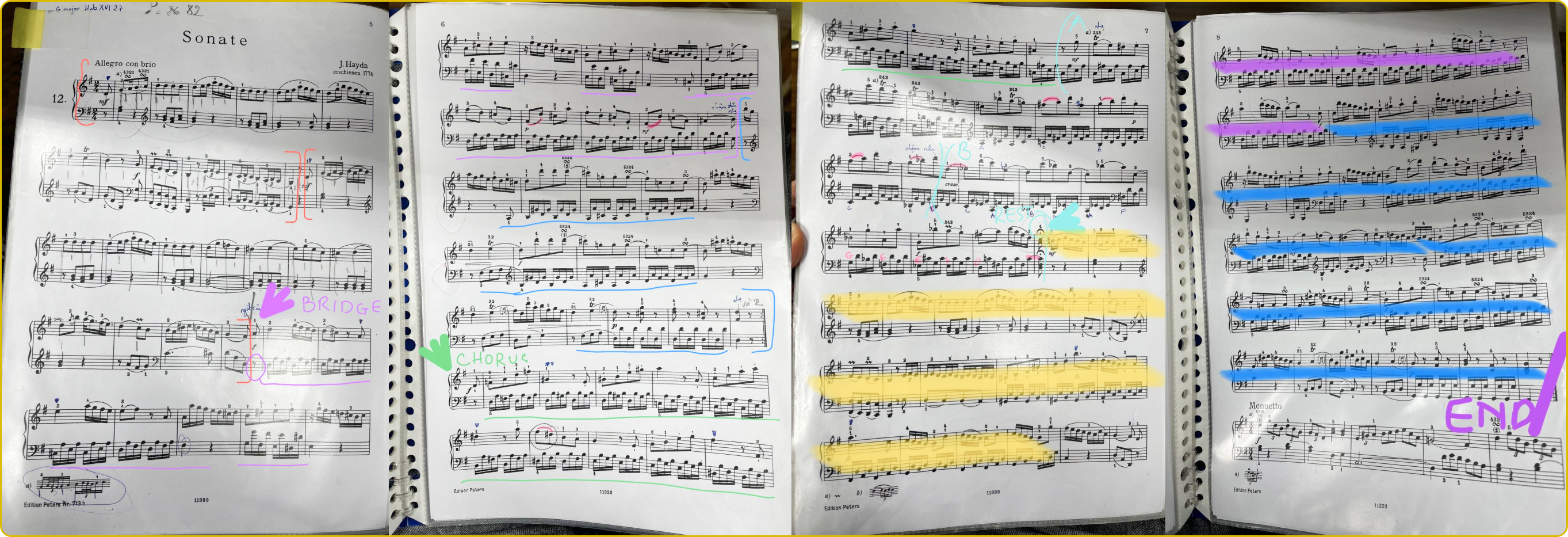
You'll notice the purple part on page 1 and the purple part on page 4 share the same melody and fingering patterns. Even though they are in different voice levels. So, I carefully practice page 1, move through the chorus, and when I get to page 4, I go back to page 1 to compare. I look for any changes in voice levels and mark the slightly different bars. I do the same process for the blue part on page 2 and 4.
Sometimes, when I want to speed things up, I practice page 1, jump straight to page 4, and then go back to the chorus and bridge (the development parts). However, I don’t recommend this trick, as it’s like taking the shortcut 😁
No matter how “chunking” speeds up my studying, an important thing is that practicing piano is building muscle memory. When you're memorizing a piece, your brain is mainly used for reading the keys and analyze technical skills. The key part is enhancing your muscle memory so you can remember the melody and movements better. To put it simply, you would need to practice until your hands almost move on their own, unconciously.
End note
This method is just for learning the notes. After that, you need to add texture, fix your posture, and bring in your interpretation and emotion.
Realizing my piano practice is a form of "chunking" made me see how much of life follows this same idea, just with different names. We group similar and relevant information, objects, and context when learning languages, organizing our homes, setting up supermarket and bookstore shelves, and designing services in hotels and hospitals.
This reminds me of the quote,
“Eventually everything connects - people, ideas, objects. The quality of the connections is the key to quality per se.”